
Miami Vice
Miami Vice: Shaping the Aesthetic of Synthwave and 1980s Electronic Music
The aesthetic of Miami Vice crystallized a glossy vision of the 1980s, fusing pastel color palettes, neon lighting, luxury modernism, and sun-drenched urban cool. This distinct visual language profoundly influenced the evolution of electronic music culture, creating a blueprint that merged style, atmosphere, and narrative in both television and music.
Miami Vice as a Visual and Cultural Phenomenon
The series emphasized style as atmosphere, using sleek suits, nighttime cityscapes, sports cars, and ocean horizons to communicate mood and sophistication. These elements mirrored the emerging soundscapes of synthesizer-driven music, where texture, mood, and cinematic emotion were as important as melody. By pairing visuals with electronic scores, Miami Vice normalized synth-heavy soundtracks as a storytelling tool, shaping audience expectations of what music could convey beyond traditional instrumentation.
Influence on Retro-Futurism
Miami Vice helped solidify a sense of retro-futurism, imagining the future through analog technology and blending optimism with melancholy, excess with restraint. Its stylized depiction of urban life, combined with electronic music, influenced how musicians and visual artists approached sound, design, and narrative cohesion. This alignment between audiovisual elements and musical texture became a hallmark of synth-based genres, inspiring a generation of artists to explore nostalgia as an aesthetic strategy.
Impact on Synthwave and Electronic Music
Decades later, synthwave artists explicitly channel Miami Vice in their music. Arpeggiated basslines, gated drums, and shimmering pads recreate the neon-lit heat and urban isolation of the show’s Miami setting. By evoking these textures, synthwave establishes a direct lineage to 1980s television and film scores, blending nostalgia, futurism, and cinematic sensibility. The show’s audiovisual identity continues to inspire contemporary electronic musicians, demonstrating how media can influence sound, mood, and cultural imagination.
Miami Vice as a Cultural Blueprint
Beyond being a popular TV series, Miami Vice became a cultural blueprint, embedding its aesthetic into electronic music and visual art. Its combination of glamour, cityscapes, and analog synth soundtracks created an enduring style that defines much of what audiences recognize as 1980s nostalgia today. From electronic music videos to album art and live performance visuals, the influence of Miami Vice is pervasive, proving its status as a timeless symbol of stylized futurity.
Legacy
The legacy of Miami Vice lies in its seamless integration of music, style, and storytelling, setting a precedent for synth-driven electronic music and retro-futuristic aesthetics. By demonstrating how visuals and sound can mutually reinforce each other, the show influenced the development of synthwave, electronic pop, and cinematic music production, leaving a lasting imprint on both popular culture and music history.
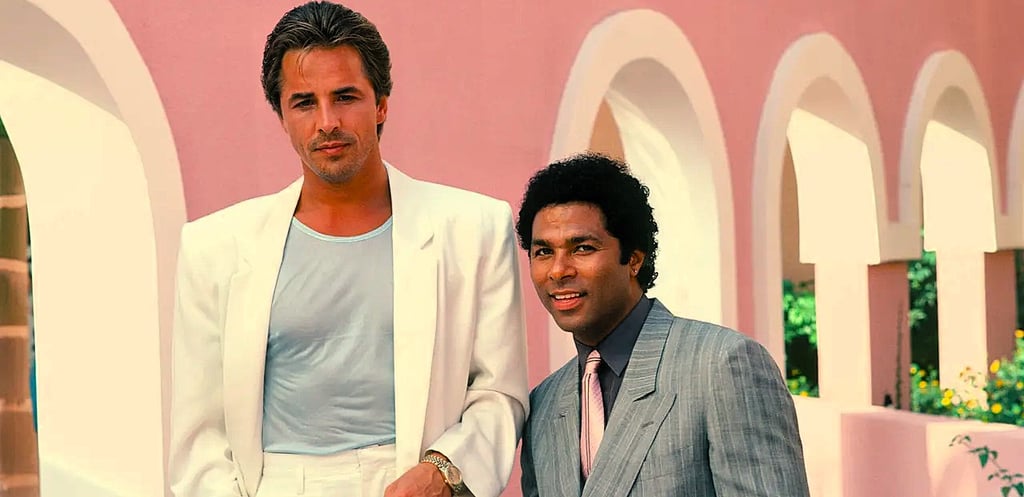

Miami Vice had a major influence on popular culture and cinema by introducing a sleek, modern visual style defined by pastel colors, stylized lighting, and music deeply integrated into the narrative. Its aesthetic reshaped fashion, music videos, and advertising, and helped push film and television toward a more cinematic approach, an influence still visible today in crime thrillers and series that prioritize mood, rhythm, and strong visual identity.
The music of Jan Hammer was central to Miami Vice’s impact, redefining how television and film used electronic music. His synthesizer-driven score fused pop, rock, and ambient textures to create atmosphere and emotion, influencing film soundtracks, TV scoring, and electronic music production for decades. This approach helped normalize electronic scores in mainstream cinema and remains a reference point for modern thrillers and neo-noir aesthetics.